DANGOTE CEMENT PROFIT HITS N975BN, SWINGS TO NET CASH POSITION
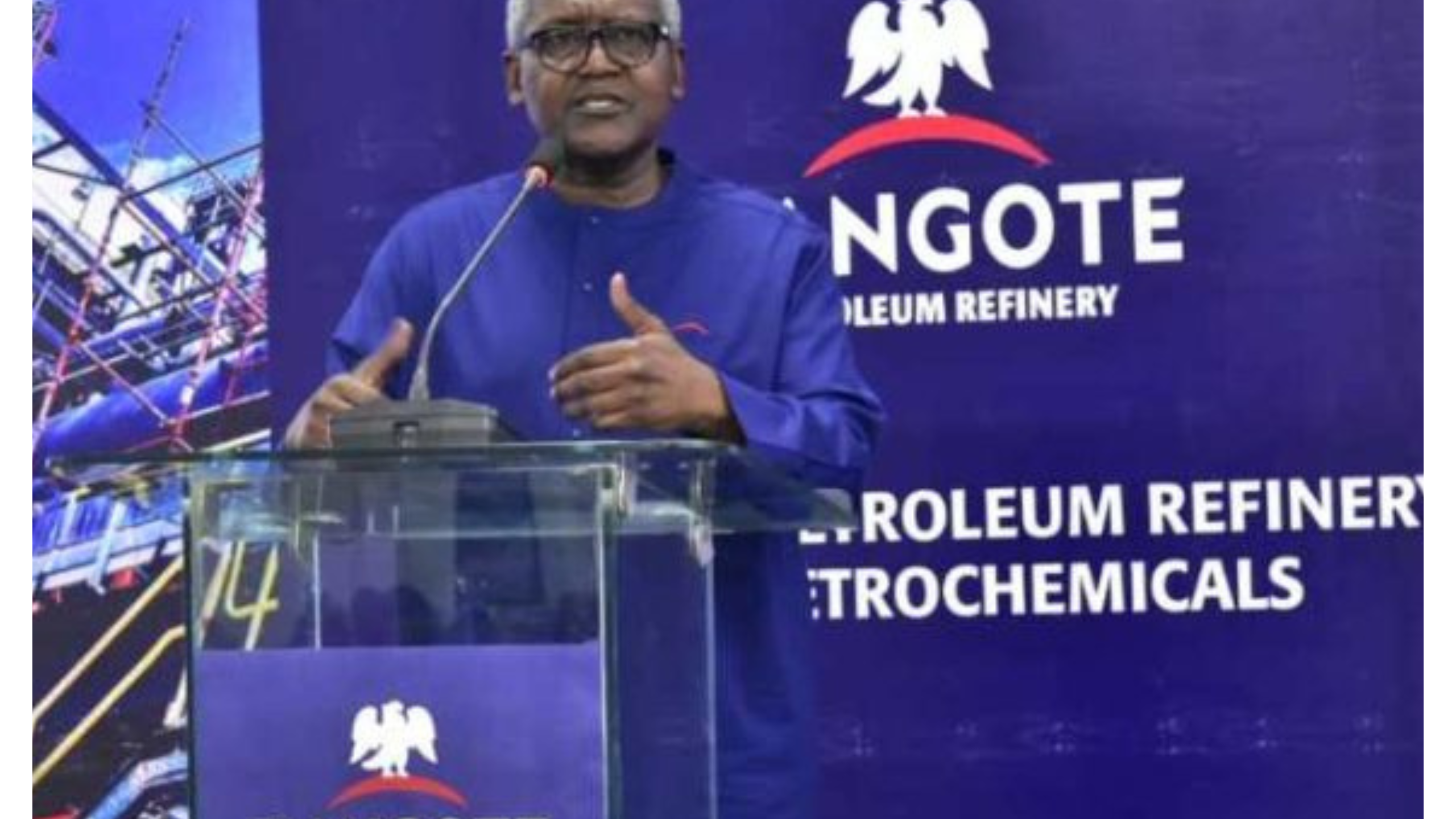
Dangote Cement profit N975bn was recorded in the first nine months of 2026 as Africa’s largest cement maker reported stronger sales, improved margins and higher production across its operations.
The company announced that profit after tax rose by 31.2 percent to N974.8 billion in the nine months ended September 30, 2026. The results were approved by the board on October 27, 2026 and announced in Lagos on October 28.
Revenue increased by 19.6 percent to N3.77 trillion during the period, driven by higher cement volumes and price management across its markets.
Earnings before interest, taxes, depreciation and amortisation, EBITDA, grew by 23.7 percent to N1.77 trillion, while EBITDA margin improved to 46.8 percent from 45.3 percent in the same period of 2025.
The improved earnings translated into stronger cash generation, with operating cash flow rising by 41.5 percent to N1.83 trillion.
READ ALSO: DANGOTE EYES EGYPT FOR NEXT INDUSTRIAL EXPANSION
One of the biggest highlights of the results was the balance sheet turnaround. Dangote Cement moved from net debt of N682.9 billion at the end of 2025 to a net cash position of N51.1 billion by September 2026.
The company also reported free cash flow of N1.26 trillion, which covered dividend payments of N753.8 billion approximately 1.7 times. This shows stronger internally generated funding for shareholder distributions.
How Dangote Cement Profit N975bn Was Achieved
Dangote Cement profit N975bn was supported by increased production and sales across Nigeria and Pan-African operations.
Group cement volumes rose by 9.4 percent to 22.1 million tonnes during the period. Revenue growth and improved margins helped drive profitability.
In Nigeria, operations recorded EBITDA growth of 23.7 percent to N1.60 trillion, with a margin of 59.8 percent. This strong margin in the home market remains the backbone of the group’s profitability.
Earnings per share increased by 33.2 percent to N58.37, reflecting the stronger profit performance and efficient cost management.
The company’s Pan-African volumes rebounded by 14 percent to 9.1 million tonnes, providing additional support to group sales after a challenging period in some markets.
Nigeria’s cement and clinker exports increased by 41.8 percent to 1.5 million tonnes, with 26 clinker shipments dispatched to Ghana, Cameroon and Côte d’Ivoire. This export growth shows Dangote Cement’s growing role as a regional supplier of cement and clinker.
The company also reported a 45 percent increase in customer advances, which reached N208.4 billion. This indicates stronger advance payments from customers and reflects confidence in supply availability.
Energy Mix And Cost Management
Dangote Cement profit N975bn was also helped by energy efficiency and cost control.
In Nigeria, the company said its energy mix helped moderate cash costs, with fuel and power costs increasing by only 2 percent despite volume growth of 9.4 percent.
This is significant because energy accounts for a large share of cement production cost in Nigeria. By using alternative fuels and optimizing its power sources, the company was able to keep costs relatively flat while growing output.
Its alternative fuel and logistics initiatives continued across Africa. The company commissioned 500 compressed natural gas trucks in Tanzania, while alternative fuel utilisation reached 30 percent in Zambia and 17.2 percent in Congo.
These initiatives are part of a broader sustainability and cost reduction strategy aimed at reducing dependence on expensive fossil fuels and lowering carbon emissions.
The use of compressed natural gas trucks also improves logistics efficiency and reduces operating costs in markets where fuel prices are high.
Expansion Plans To 80 Million Tonnes
Dangote Cement profit N975bn comes at a time when the company is pushing ahead with capacity expansion.
The company said construction of the first phase of its 6 million tonnes per annum integrated plant in Itori, Ogun State, remained on schedule for commissioning.
The Itori project forms part of the company’s medium term plan to expand installed production capacity to 80 million tonnes annually across Africa.
The expansion could strengthen the company’s production capacity and position it to meet rising demand across Nigeria and other African markets.
Nigeria’s housing deficit, infrastructure projects by federal and state governments and growing demand in West and Central Africa are expected to drive cement consumption in the coming years.
By expanding capacity now, Dangote Cement is positioning itself to capture that demand while maintaining its market leadership.
Analysts say the Itori plant will also create jobs, boost local production and reduce the need for cement imports in the region.
Cash Flow And Balance Sheet Strength
One of the most important aspects of Dangote Cement profit N975bn is the quality of earnings and cash flow behind it.
Operating cash flow of N1.83 trillion shows that profits are backed by real cash generation, not just accounting gains.
The swing from net debt of N682.9 billion to net cash of N51.1 billion is a major improvement in financial health. It means the company now has more cash and cash equivalents than total borrowings.
This improves its ability to fund expansion, pay dividends and withstand economic shocks.
Free cash flow of N1.26 trillion covering dividends 1.7 times is also a positive signal for investors. It means the company can pay shareholders from internally generated cash without needing to borrow.
For investors on the Nigerian Exchange, the 33.2 percent growth in earnings per share to N58.37 is a key metric. It directly affects dividend expectations and share price performance.
The strong results also come amid improved confidence in Nigeria’s cement sector, which benefits from infrastructure spending and urbanization.
What The Results Mean For The Market
Dangote Cement profit N975bn highlights the cement maker’s ability to combine higher volumes with improved profitability and cash generation while continuing to invest in additional production capacity.
The company remains the most valuable cement producer in Africa and a major contributor to Dangote Group’s overall earnings.
For the Nigerian economy, the results show that local manufacturing can be profitable despite energy and logistics challenges if companies invest in efficiency and scale.
The growth in exports to Ghana, Cameroon and Côte d’Ivoire also shows that Nigeria can be a net exporter of cement and clinker, earning foreign exchange and supporting regional trade.
The increase in customer advances to N208.4 billion suggests that distributors and bulk buyers are willing to pay upfront to secure supply, which points to strong demand.
Going forward, market watchers will be looking at how the company manages energy costs, sustains Pan-African growth and delivers the Itori project on time.
They will also watch how government infrastructure plans, including roads, housing and industrial parks, drive cement demand in 2027.
For now, the nine months results confirm that Dangote Cement remains in a strong financial position, with record profit, strong cash flow and a clean balance sheet.
SOURCE: PUNCH NG