JUMIA TRIMS WORKFORCE BY 3% ON PATHWAY TO PROFITABILITY
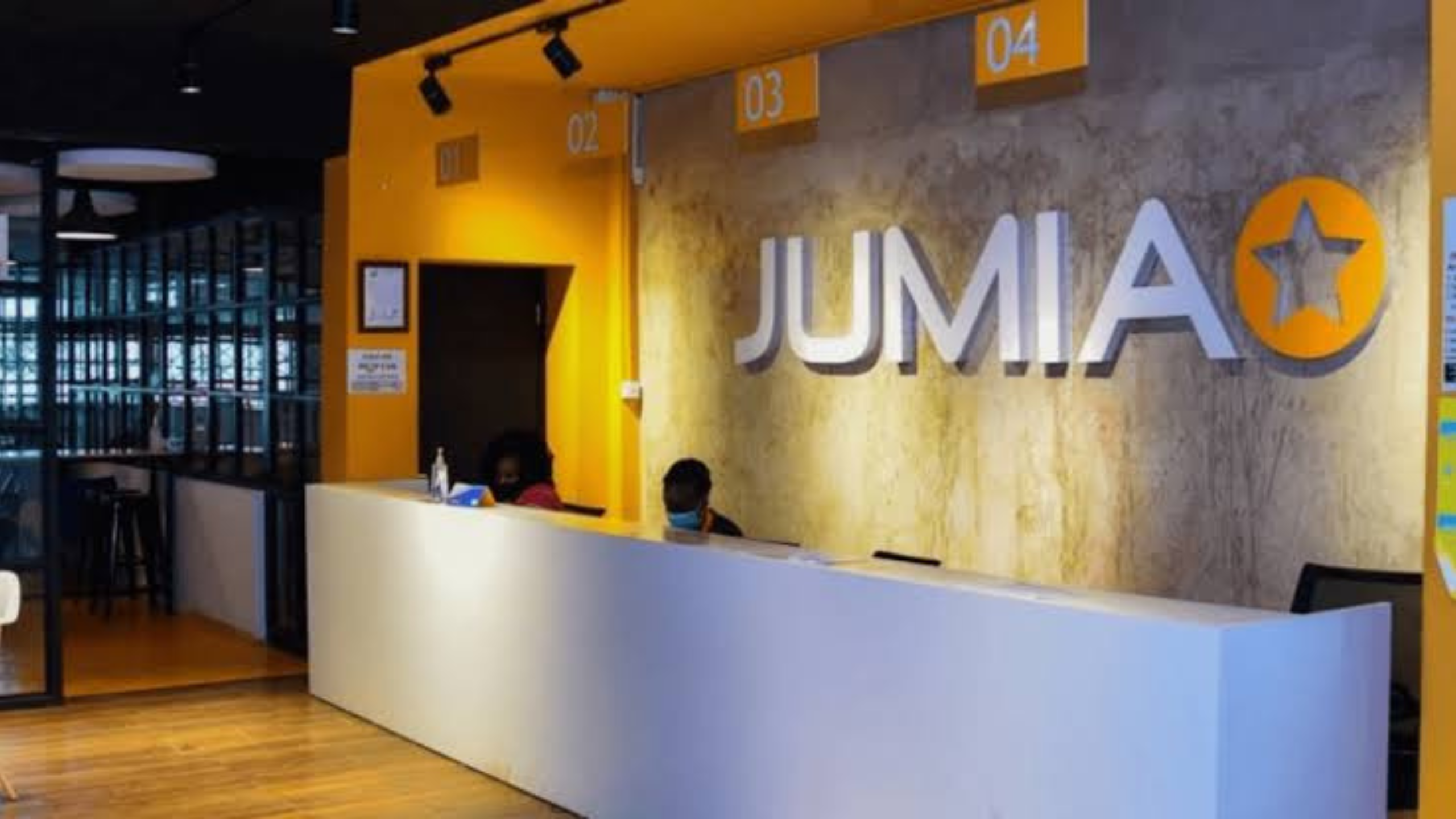
Jumia trims workforce by 3% on pathway to profitability as pan-African e-commerce leader reduces staff to 1,720 employees in Q3 2026 and leans on artificial intelligence automation to cut costs and achieve profitability target by year-end.
Jumia Group, the pan-African e-commerce leader, trimmed its workforce further by three percent in the third quarter, leaving just 1,720 employees on its payroll as the company leans on artificial intelligence to cut costs and reach profitability by year-end.
This layoff is in line with its broad plan to cut at least 200 full-time jobs over the next two quarters as the African e-commerce company pushes to reduce costs, improve efficiency, and achieve profitability by late 2026.
“We continue to streamline the organisation. Following an 11 per cent reduction in total headcount in the second quarter of 2026, headcount declined by a further 3 percent during the third quarter of 2026, with just over 1,720 employees on payroll as of September 30, 2026,” the company said in its latest Q3 results released earlier this week.
The latest cuts come on top of a $50 million capital raise anchored by a $25 million investment from the International Finance Corporation, completed in August 2026 and a strong showing in the third quarter led by a 30 percent GMV rise in Nigeria.
Jumia trims workforce by 3% on pathway to profitability with Q3 cost discipline.
AI Automation Drives Headcount Efficiency
Jumia trims workforce by 3% on pathway to profitability as AI replaces manual operations across logistics and customer service.
Despite a strong performance in key markets, higher fuel prices and continued memory chip cost increases in smartphones and electronics impacted its growth plans. According to the company, cost discipline has continued to drive its bottom line, pushing it towards automation for its operations.
“AI-driven automation across each of our operations, finance, support functions, and technology teams is enabling us to drive further headcount efficiency, and we expect to continue reducing headcount going forward. Building on its use in logistics, customer service and seller management, we are extending artificial intelligence across our operations, including seller onboarding and support, product listing and content workflows, to keep increasing efficiency and lowering costs,” the notes in its financials read.
Jumia is using AI chatbots to handle 70 percent of customer queries, down from 1,200 support agents in 2022 to under 400 in 2026. In logistics, AI route optimization reduced delivery time by 18 percent and fuel cost by 12 percent. In seller management, AI auto-generates product descriptions and flags counterfeit listings, reducing manual content team by 40 percent.
This is not the first time Jumia has cut costs so steeply. Under the leadership of Francis Dufay, the company cut expensive overhead by moving senior executives based in Dubai to Africa, reduced its workforce and moved away from a focus on delivering low-ticket items. Since then, it has undertaken cost-cutting measures that reduced headcount by more than 60 percent.
From peak of over 5,000 employees in 2021, Jumia has cut over 65 percent of staff. The company closed Dubai headquarters in 2022, cut offices in Europe, and exited non-performing categories like groceries in some markets to focus on higher-margin electronics, fashion and home goods.
The move comes as Jumia posted stronger third-quarter growth and narrowed operating losses, signalling that its cost-cutting measures are beginning to improve financial performance.
Revenue Up 33% As GMV Hits $224 Million
Jumia trims workforce by 3% on pathway to profitability despite strong Q3 revenue growth and narrowed losses.
Revenue rose 33 percent year-on-year to $60.7 million, compared to $45.6 million in Q3 2025 while gross merchandise value (GMV) increased 14 percent to $224 million as against $197.2 million in Q3 2025. Loss before Income tax reduced 26 percent to $13.1 million, compared to $17.7 million in the third quarter of 2025, down 26 percent year-over-year, and 24 percent in constant currency.
Nigeria led growth with GMV up 30 percent year on year, driven by improved supply in smartphones, Starlink kits and fashion, and growth in JForce agent network which now accounts for 42 percent of orders. Egypt and Kenya also grew single digits while Tunisia remained flat.
Average order value increased to $38 from $32 due to shift to higher ticket items. Commission take rate improved to 12.5 percent from 11.2 percent as Jumia increased seller fees for logistics and advertising.
Operating expenses fell 28 percent to $31.2 million, with G&A down 35 percent and fulfilment down 22 percent, reflecting headcount cuts and warehouse consolidation from 14 to 8 warehouses across Africa.
Cash burn reduced to $9.8 million in Q3 from $22 million a year earlier. Cash balance stood at $98 million after IFC raise, providing runway to profitability.
“We have set in motion a plan to strengthen our network effect by improving the value proposition for all users, with a particular focus on customers, JForce agents and pickup stations. We believe we can accelerate acquisition and engagement again without compromising our monetisation or unit economics, primarily through product and operational improvements,” Dufay, the company’s chief executive, said.
“The investment anchored by the International Finance Corporation, a member of the World Bank Group, and joined by current leading shareholders and selected new investors, has strengthened our balance sheet and de-risked our path to profitability in a volatile environment. The current headwinds will impact our bottom line, but we continue to expect to achieve positive cash flow in the fourth quarter of 2026.”
$50m IFC Raise De-risks Profitability Path
Jumia trims workforce by 3% on pathway to profitability after IFC $25m anchor investment.
In August 2026, Jumia raised $50 million via private placement at $6.50 per ADS, with IFC investing $25 million, and existing shareholders Baillie Gifford and Pernod adding $20 million. The raise was critical as cash had dropped to $58 million in Q2.
IFC investment marks World Bank arm’s first direct investment in African e-commerce, signaling confidence in Jumia’s asset-light model and path to profitability. IFC will also provide advisory on logistics efficiency and gender inclusive sourcing, targeting 40 percent female sellers.
Jumia is not alone in this trimming wave. It has rained layoffs and furloughs in Africa tech all year. The latest casualties are Kuda staff and Helium Health, which have both endured a difficult year.
Kuda cut 30 staff in October 2026 as it pivots to consumer lending, while Helium Health cut 15 percent in September amid fundraising slowdown. Overall African tech layoffs topped 5,000 in 2026, down from 9,000 in 2023, showing market correction continues.
For Jumia, next milestone is Q4 2026 positive cash flow. Analysts at Renaissance Capital say target is achievable if Q4 GMV grows 20 percent driven by Black Friday and Christmas sales, and headcount stays below 1,600. NYSE-listed shares rose 8 percent to $7.12 after results, but still down 95 percent from $65 IPO peak in 2019.
Jumia trims workforce by 3% on pathway to profitability as company bets AI and lean operations will finally deliver profit after 13 years of losses.
SOURCE: BusinessDay NG